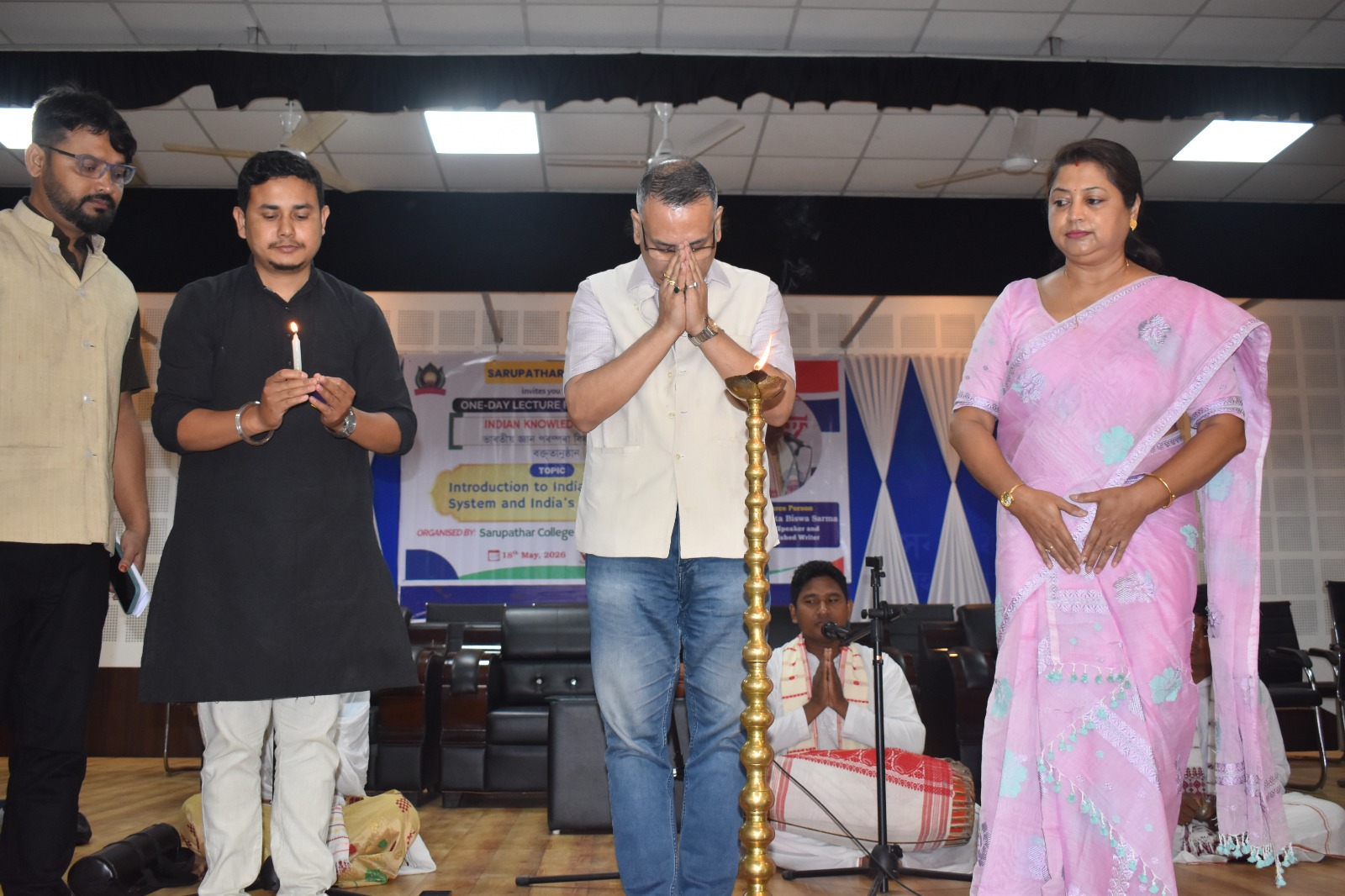
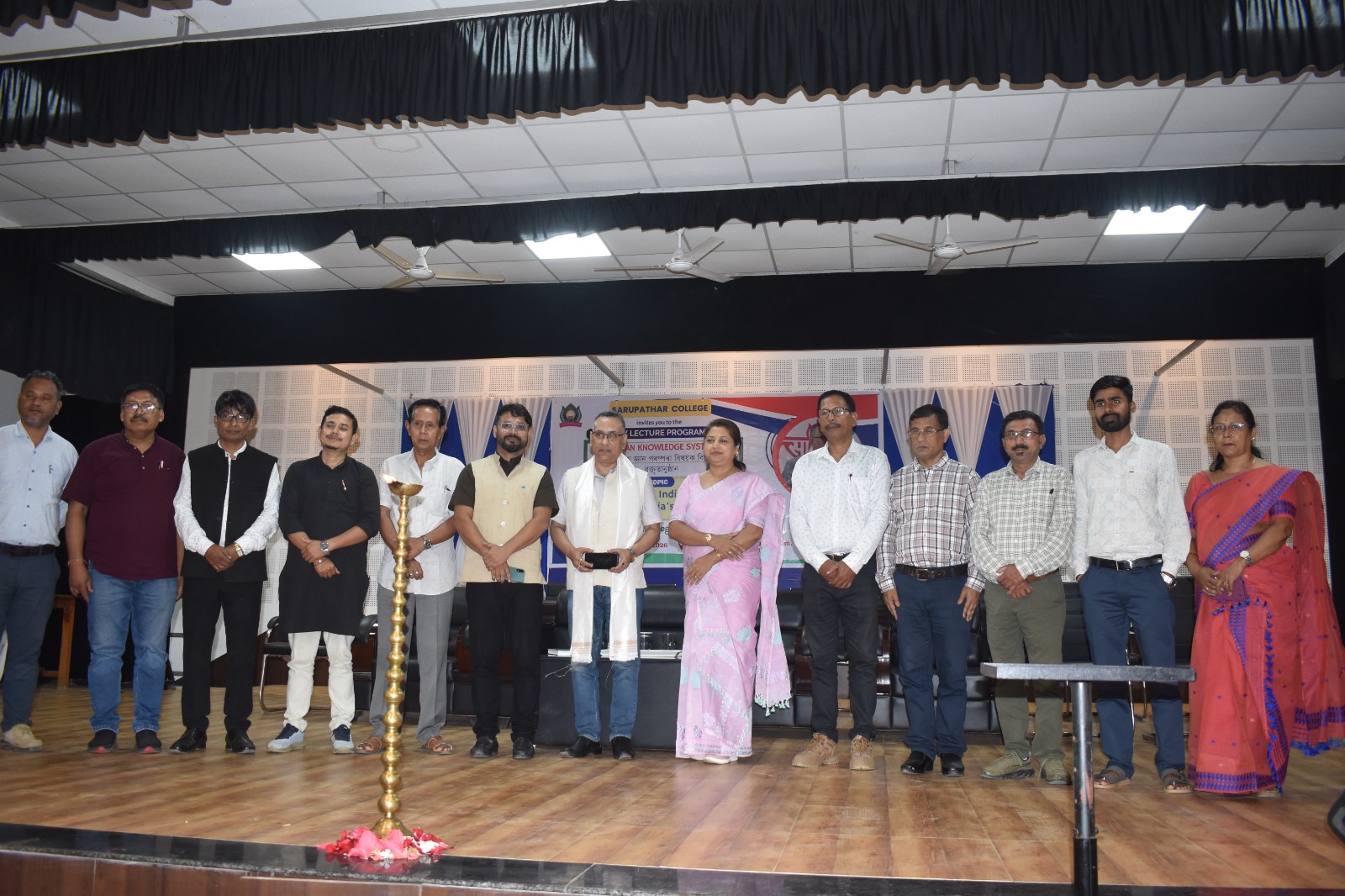
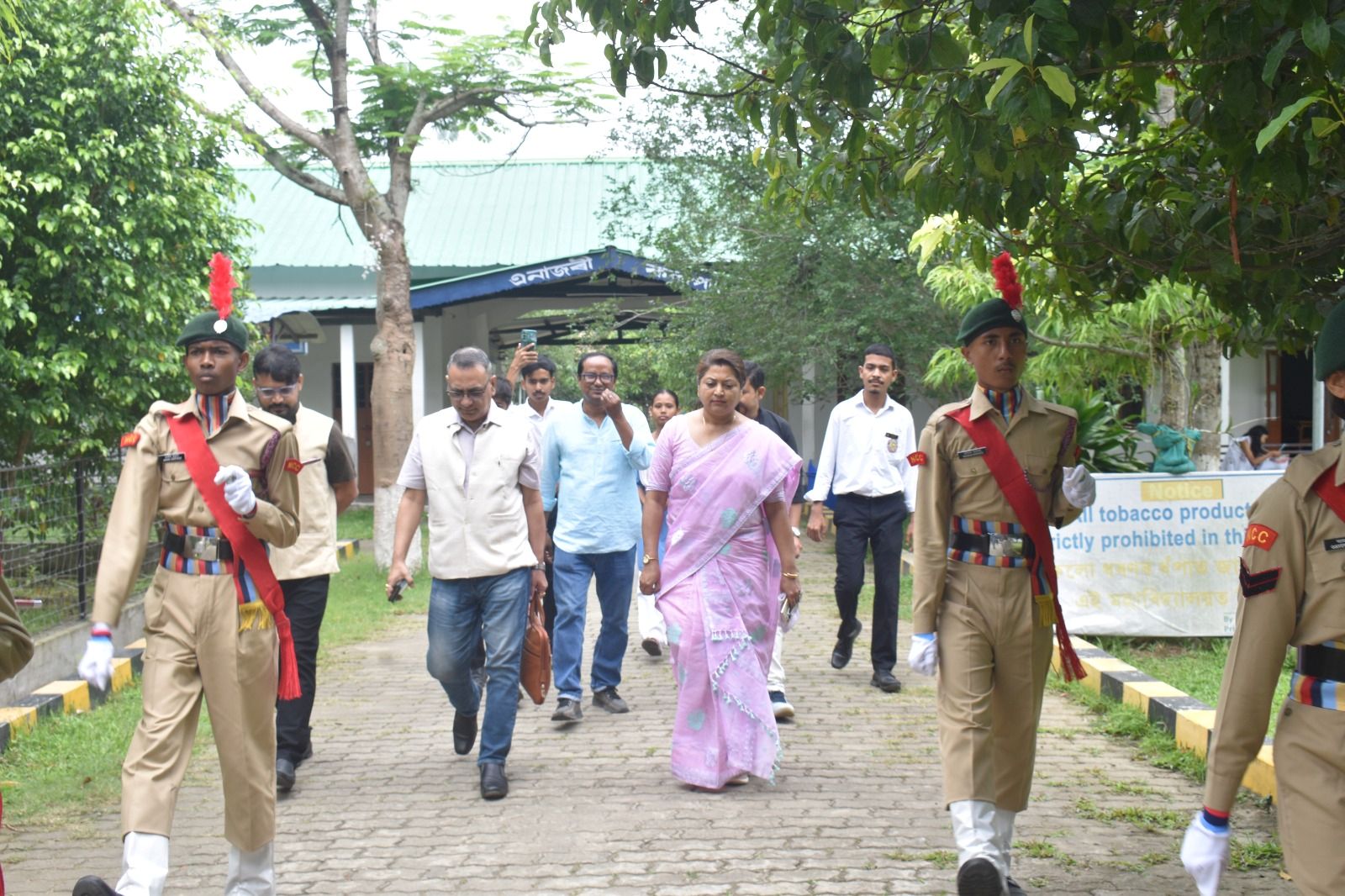
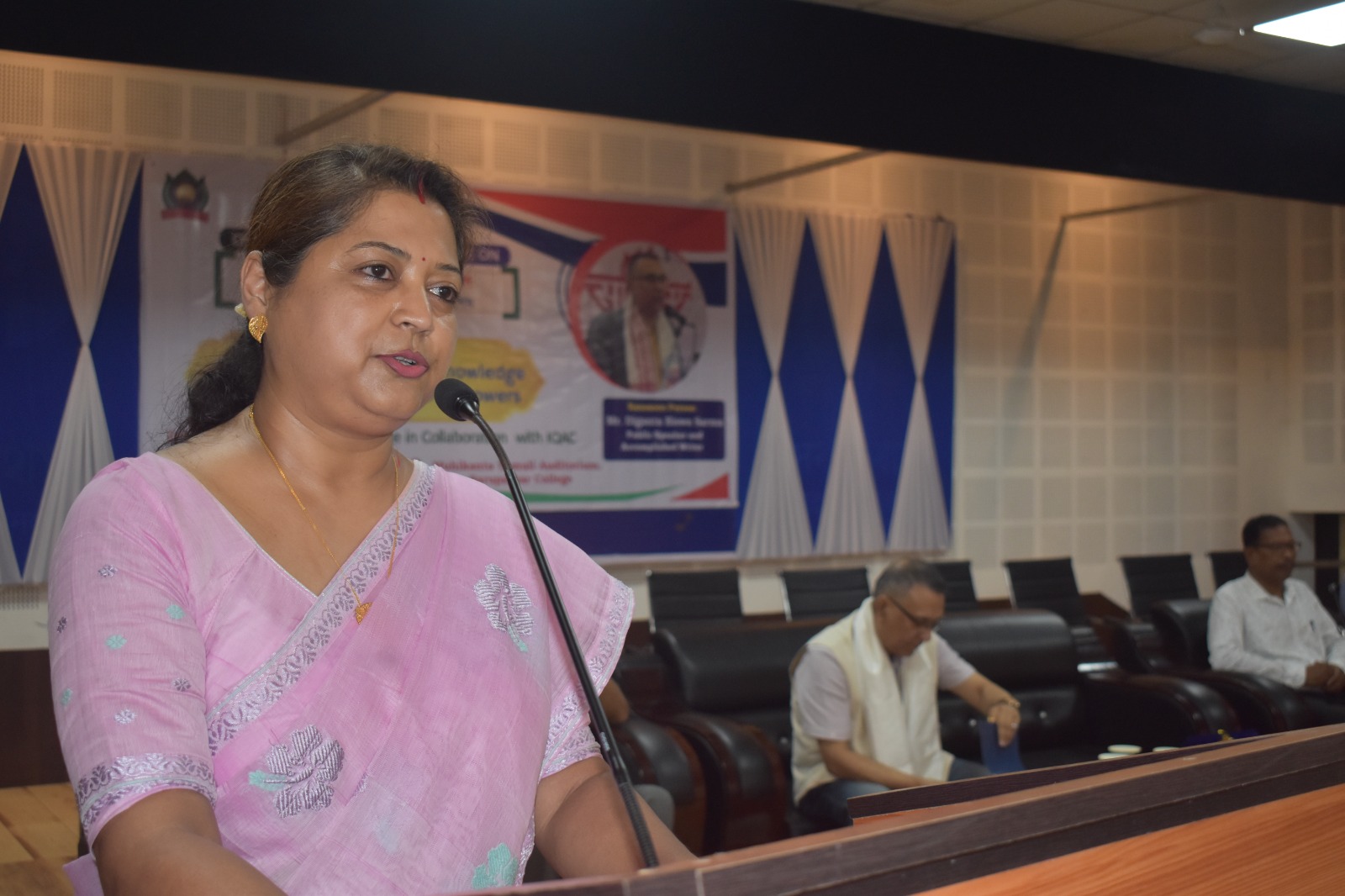
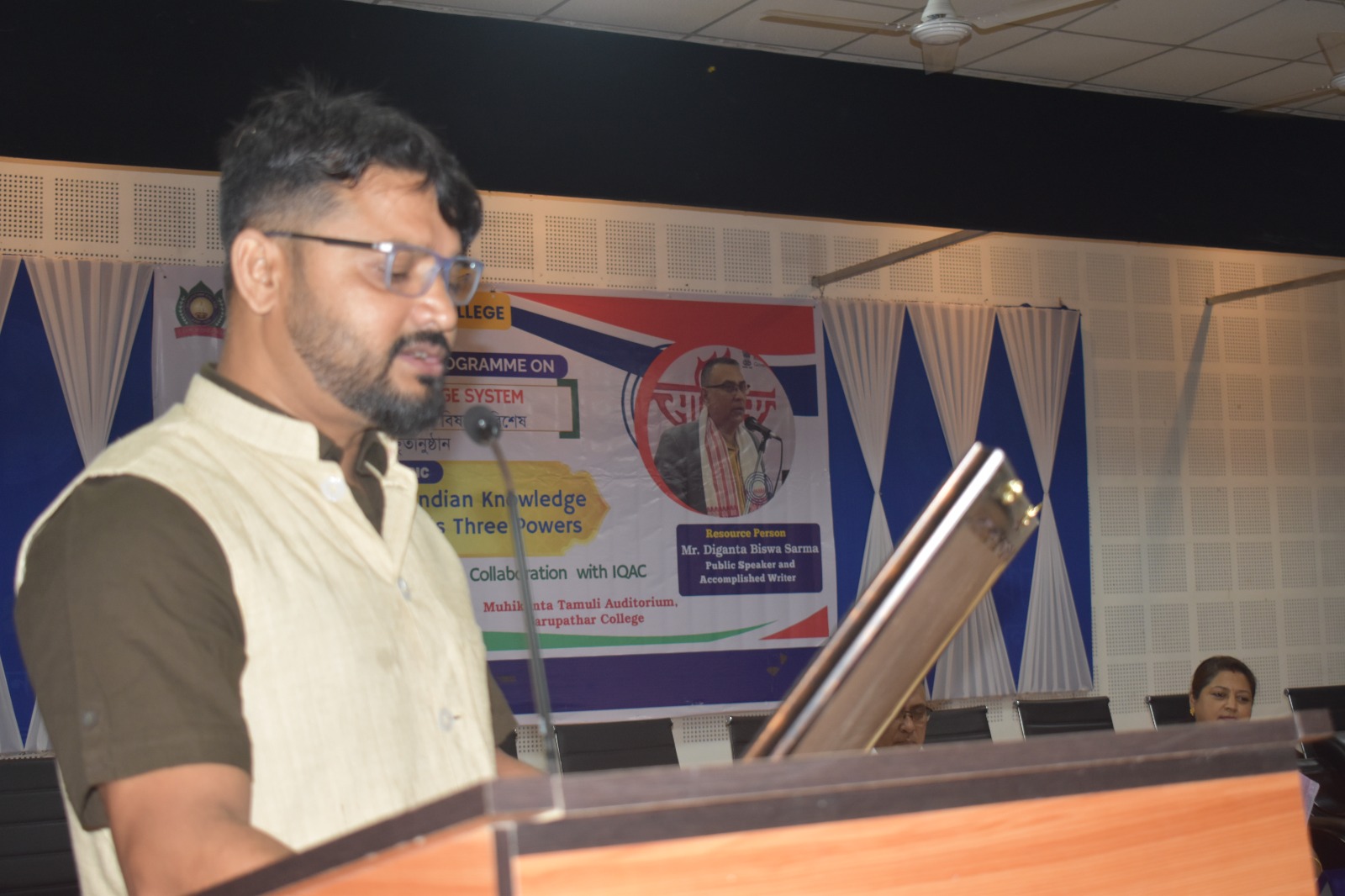
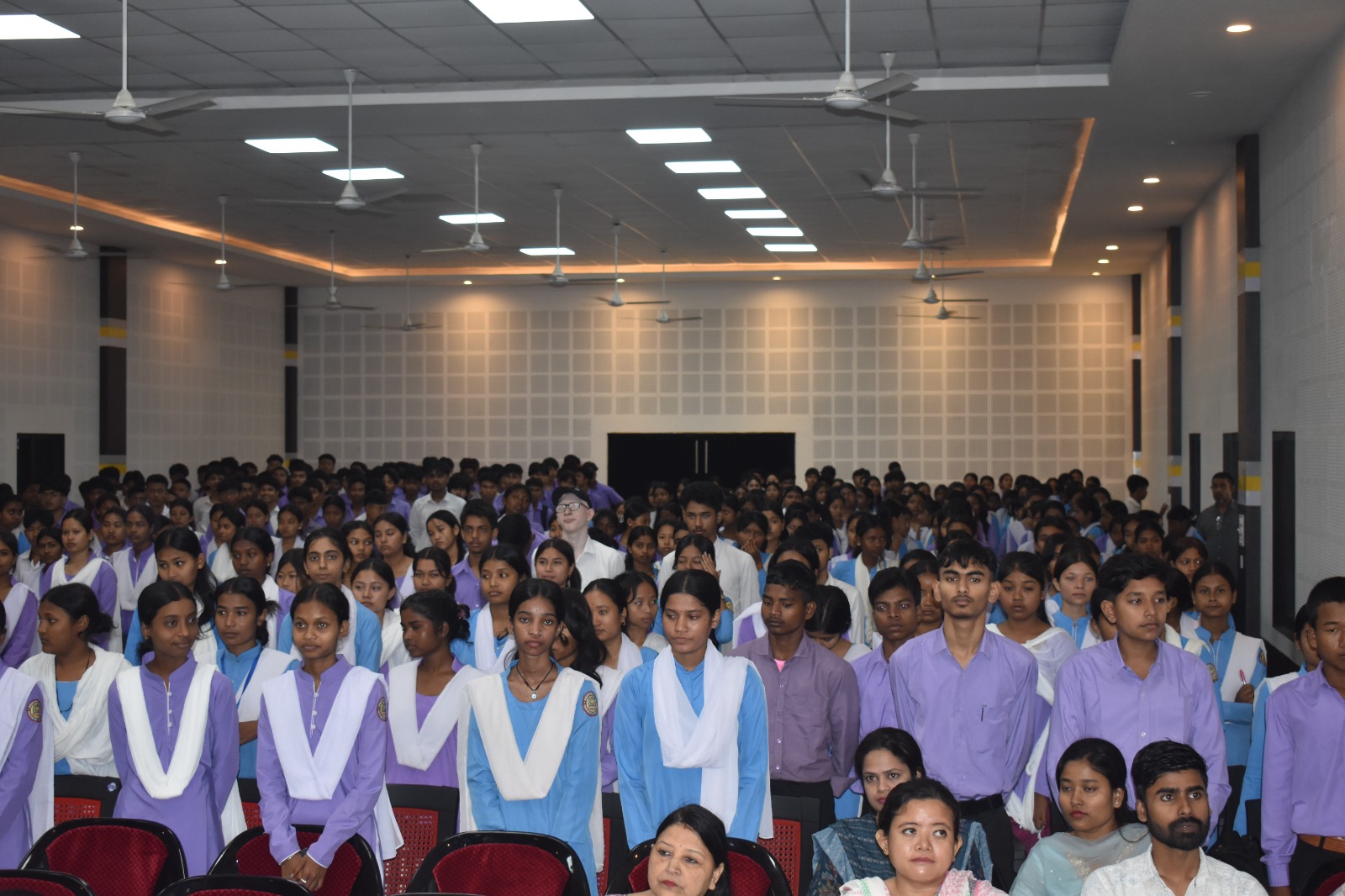
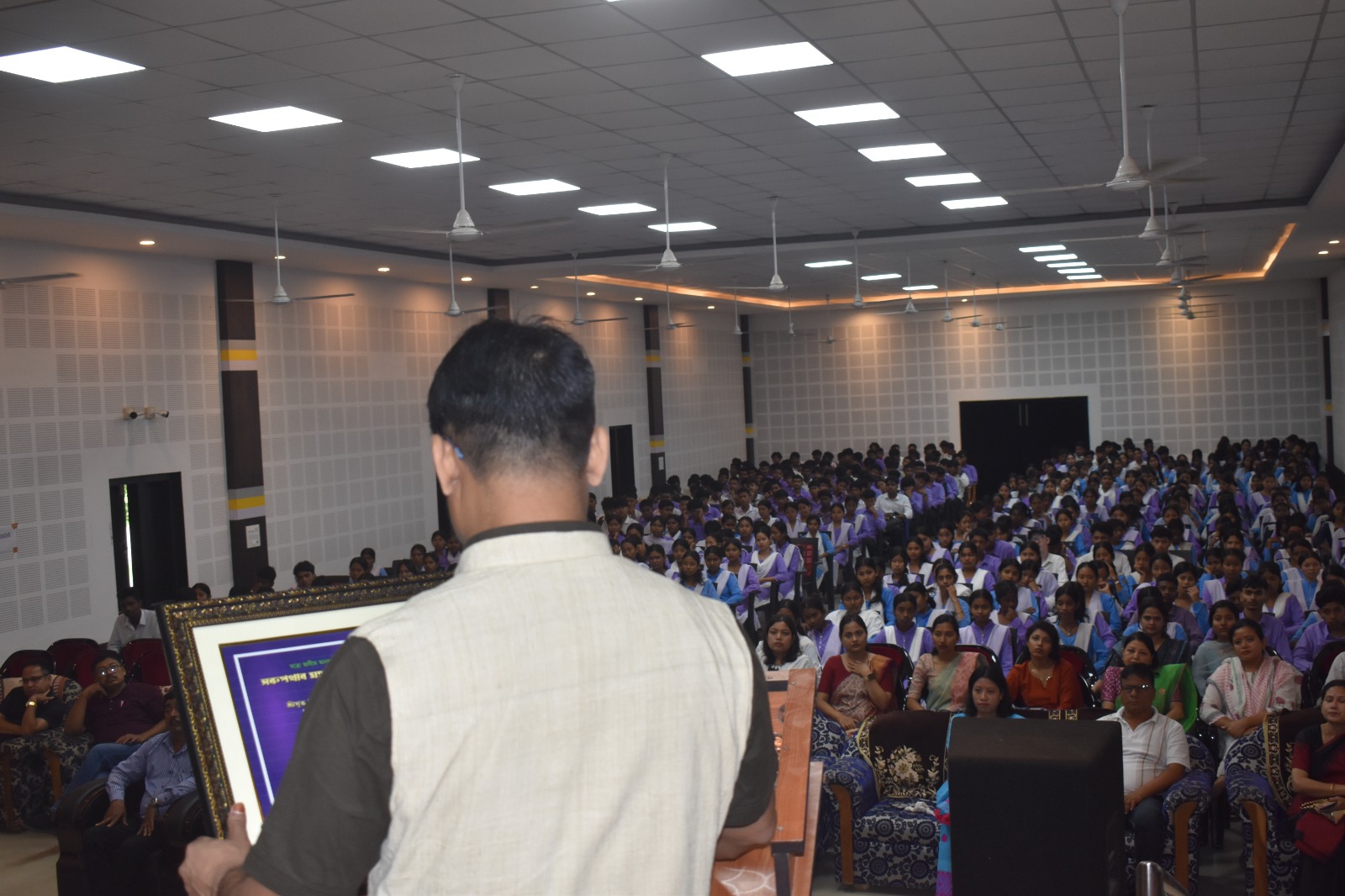
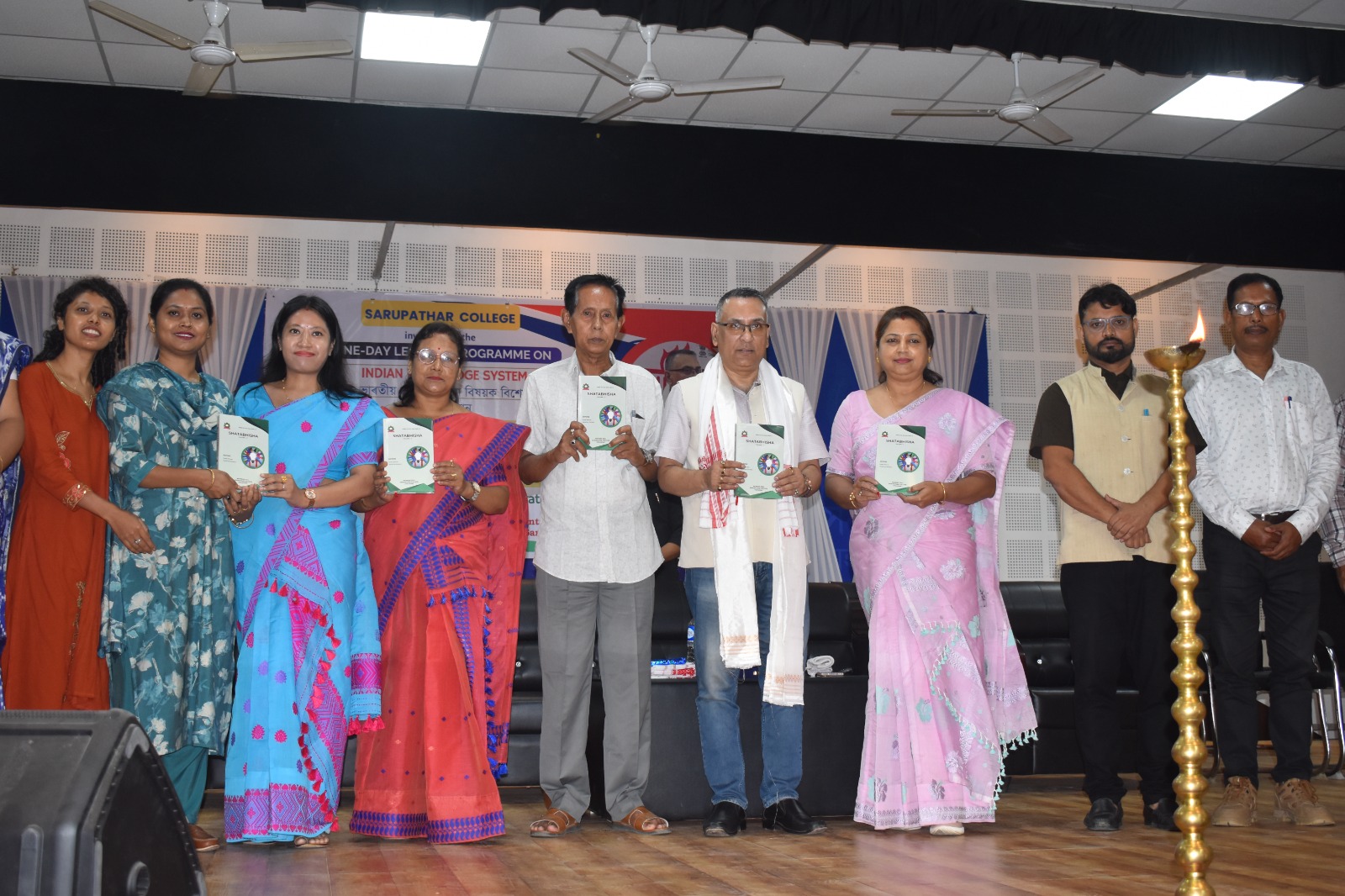
Sarupathar College, in collaboration with IQAC, successfully organized a One-Day Lecture Programme on Indian Knowledge System on 18th May, 2026 at the Muhikanta Tamuli Auditorium, Sarupathar College. The programme was conducted with the objective of introducing students and faculty members to the rich intellectual and spiritual heritage of India and to create awareness about the growing relevance of the Indian Knowledge System (IKS) in contemporary times.
The resource person for the programme was Diganta Biswa Sarma, a renowned public speaker and accomplished writer known for his inspiring lectures on Indian philosophy, culture, and civilization. The lecture programme witnessed the active participation of students, faculty members, IQAC members, and invited guests.
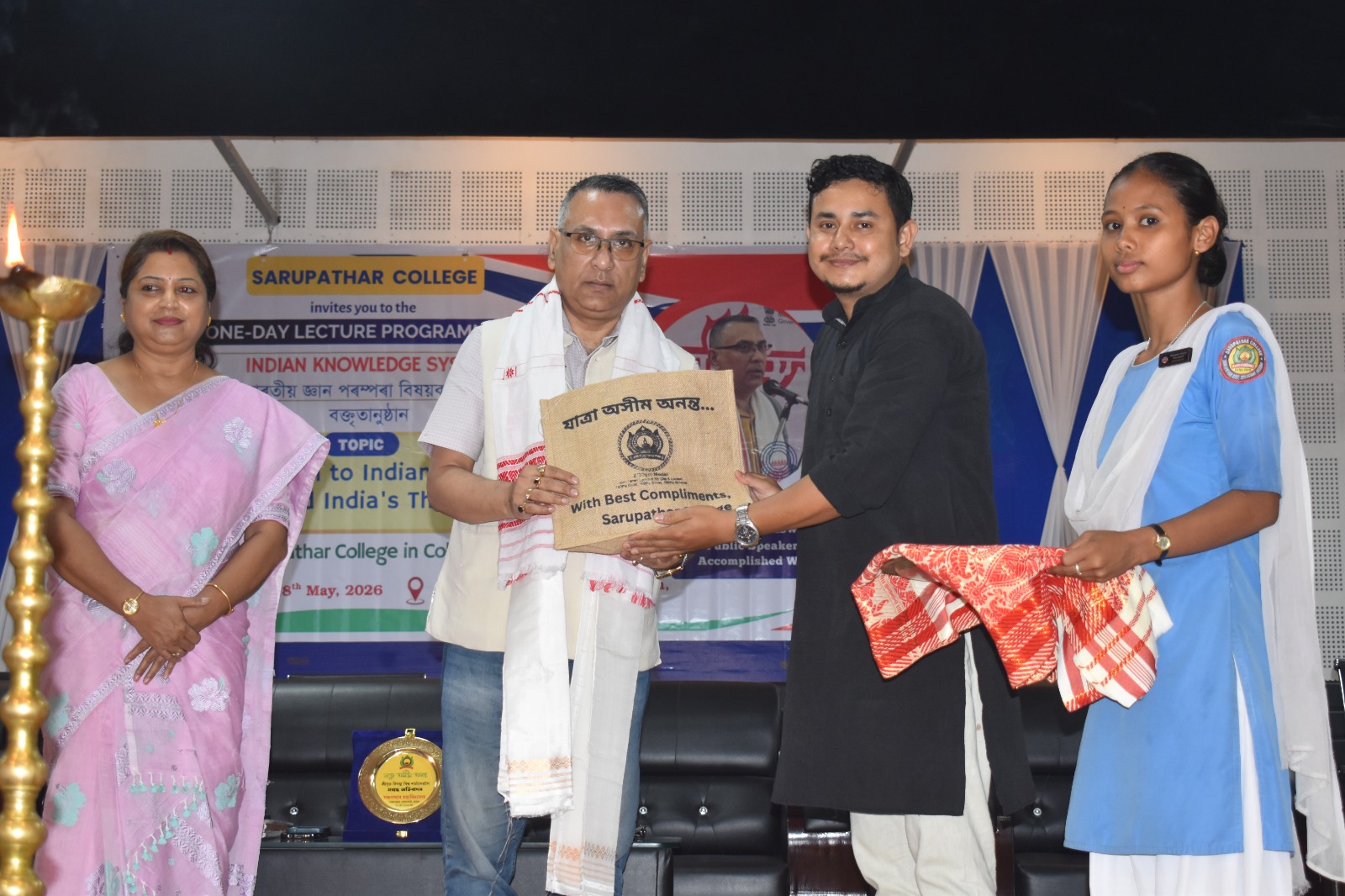
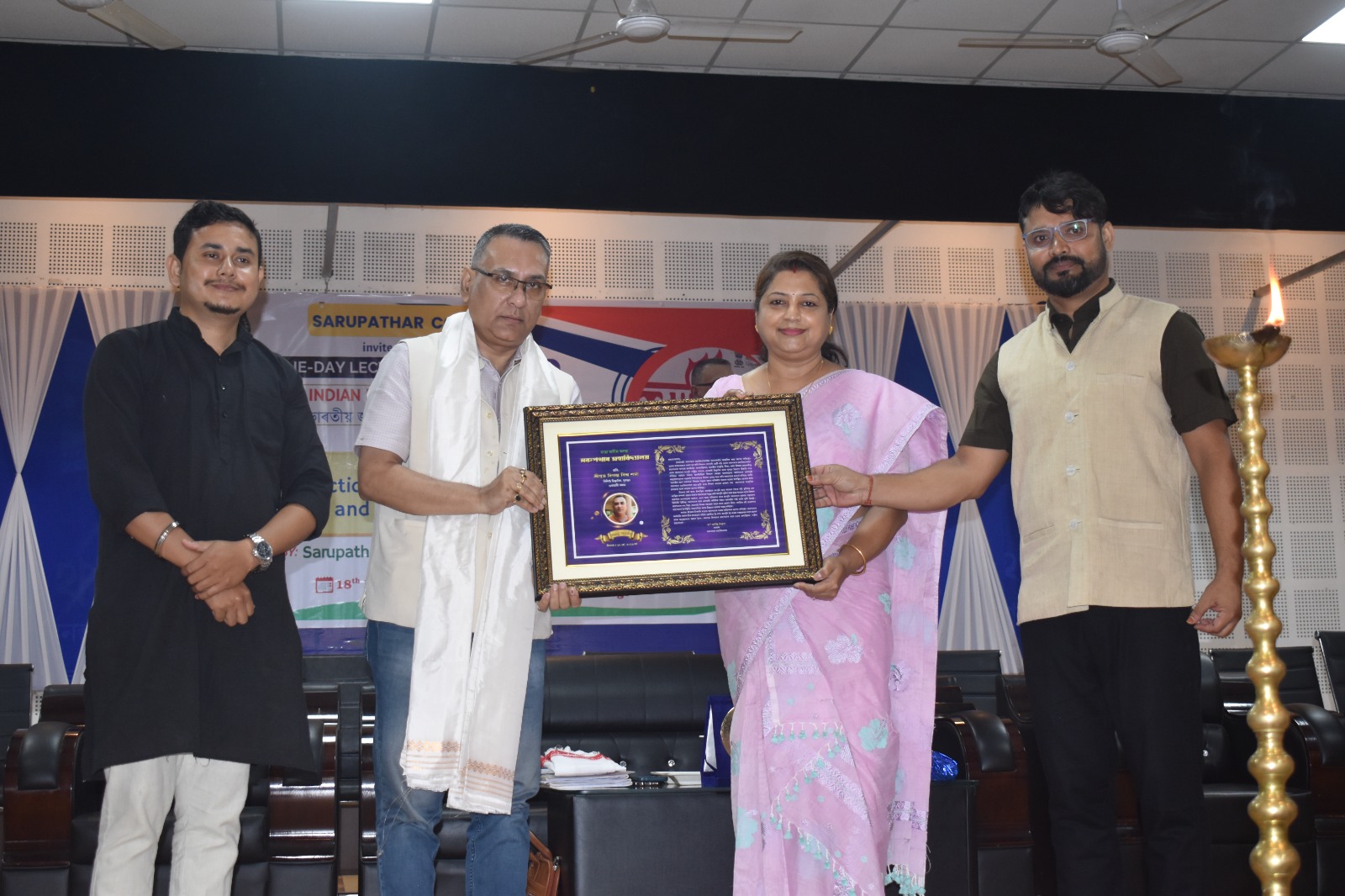
The programme began with a warm welcome address delivered by the organizing committee. The speaker was felicitated with traditional Assamese Gamosa and tokens of respect. In his introductory remarks, Mr. Diganta Biswa Sarma very humbly stated that he considered himself neither a scholar nor a systematic writer in the field of Indian Knowledge System. Rather, he described himself as a passionate orator and learner who was deeply inspired by his ideal, Sri Aurobindo. He mentioned that the writings and philosophy of Sri Aurobindo opened before him the infinite domain of Indian Knowledge System and encouraged him to explore the depth of Indian civilization, spirituality, and intellectual traditions.
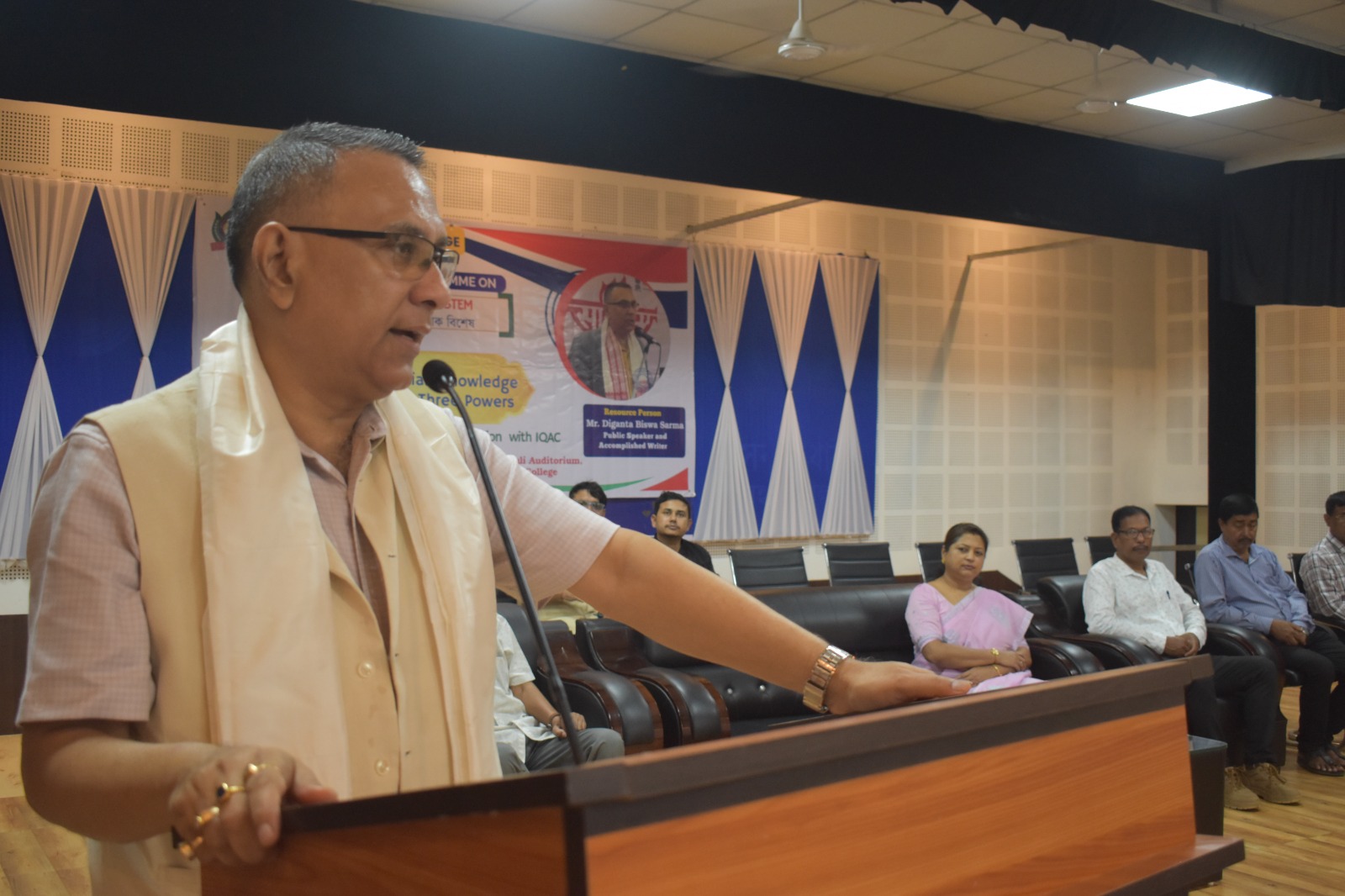
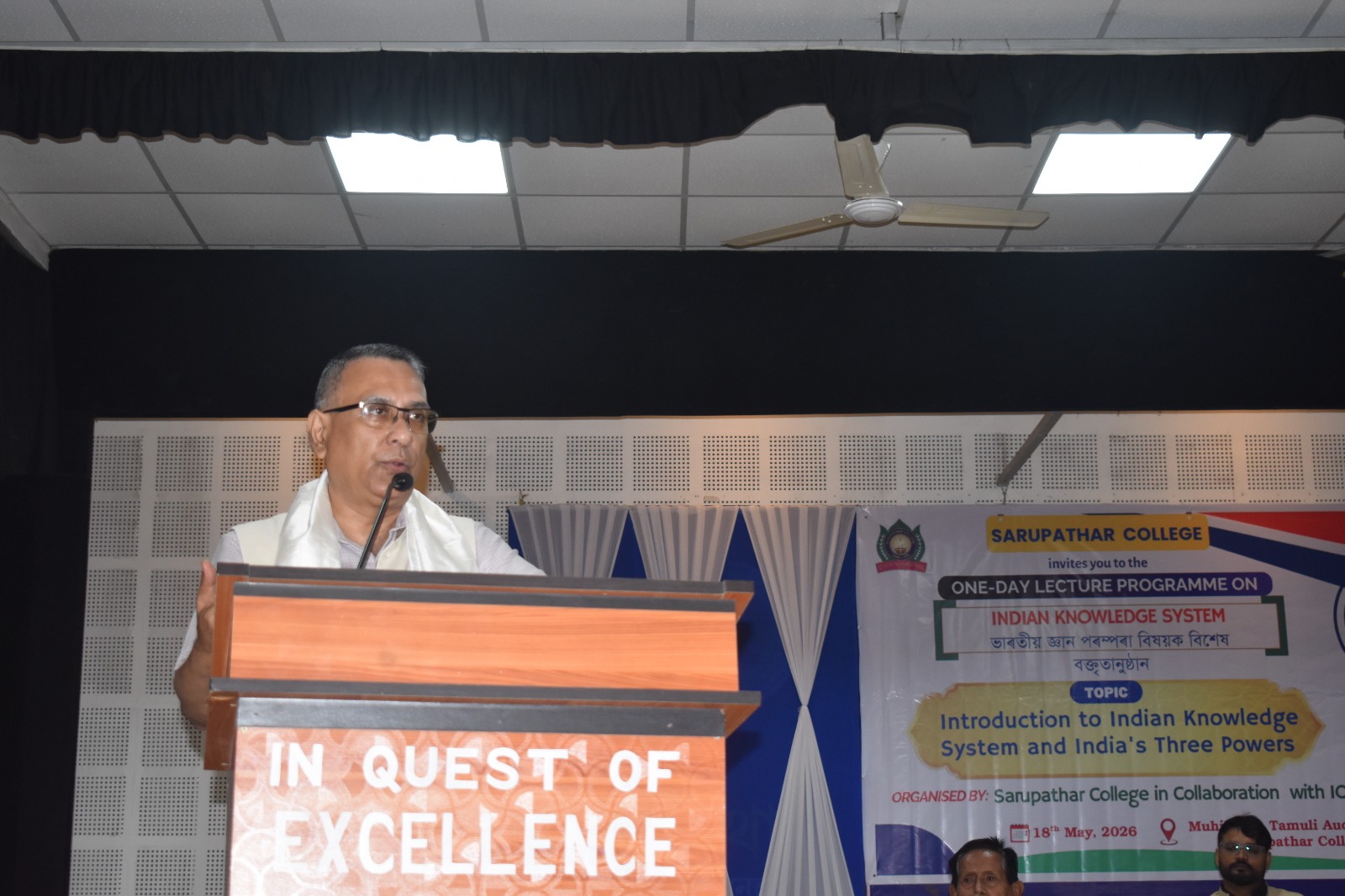
The topic of the lecture was “Introduction to Indian Knowledge System and India’s Three Powers.” Throughout the lecture, the speaker elaborately discussed the significance and contemporary relevance of the Indian Knowledge System. Referring extensively to the Ramayana, Mahabharata, and Bhagavad Gita, he explained how India’s ancient texts are not merely religious scriptures but also repositories of ethics, governance, psychology, philosophy, social values, and scientific temperament. He highlighted that these texts continue to guide humanity in understanding life, duty, morality, and self-realization.
Mr. Sarma explained that Indian Knowledge System is becoming increasingly prominent in India today because the modern world is gradually realizing the limitations of purely materialistic development. According to him, India possesses a unique civilizational strength rooted in its age-old wisdom and holistic approach towards life. He emphasized that IKS promotes harmony between science and spirituality, individual progress and collective welfare, as well as knowledge and wisdom.
One of the major highlights of the lecture was his discussion on India’s Three Powers — Spirituality, Creativity, and Intellectuality. He elaborated that spirituality forms the foundation of Indian civilization and teaches human beings the values of compassion, self-discipline, and inner awakening. Creativity, according to him, is reflected in India’s art, literature, music, architecture, and cultural diversity that evolved through centuries. Intellectuality represents India’s contributions in philosophy, mathematics, astronomy, medicine, linguistics, and various branches of knowledge that have enriched global civilization.
Drawing references from several of his public lectures and YouTube discussions, Mr. Sarma also stressed the importance of reconnecting the younger generation with indigenous knowledge traditions. He urged students to study Indian philosophies not merely as historical subjects but as living traditions capable of addressing modern crises related to ethics, identity, mental health, and environmental imbalance. He further stated that the National Education Policy (NEP) 2020 has rightly emphasized the incorporation of Indian Knowledge System into higher education for creating culturally rooted and globally competent citizens.
The lecture was highly engaging and thought-provoking. The speaker’s eloquence, simplicity of language, and practical examples captivated the audience throughout the session. Students actively interacted with the resource person during the question-answer session and expressed keen interest in learning more about Indian philosophy and knowledge traditions.
The programme concluded with a vote of thanks delivered by Mr Satyabrat Dutta on behalf of IQAC Coordinator, who expressed sincere gratitude to the distinguished speaker, faculty members, students, and organizers for making the programme successful. The event proved to be academically enriching and inspirational, encouraging participants to appreciate the depth and relevance of India’s rich knowledge heritage in the modern era.